Texas Voter ID law remanded
August 5th, 2015
Here’s today’s 5th Circuit decision, remanding the Texas voter ID law. It’s pretty convoluted:
What really bothers me is the vacuous claims of “voter fraud” as justification for these restrictions on voting. Show me the cases! We’ve got that one case of voter fraud orchestrated by “Jake” (who was acquitted!), but let’s hear about the convictions, I think it’s something like 85 since 2004 or some such.
Here are posts on Legalectric about the Coates case:
Jake acquitted of voter fraud!!!!
March 14th, 2007
Voter Registration – Ray Cox, strip joints, and voter fraud
October 6th, 2005
My outrage is the RIGHT outrage… NOT!
August 5th, 2015

There’s a piece in The Atlantic about the “my outrage is better than your outrage” or “my outrage is more legitimate than your outrage” challenge going around, and folks, get real, who cares? People are posting outrage, and then getting worked up about challenges like “what about #(your favorite cause hashtag here)” and reacting defensively about challenges to their outrage de jour. So what? Why take objections personally? Why object to a challenge, rather than think about it? Why would you regard a challenge to your thoughts as a restriction to your speech? It’s a conversation, and it’s a conversation that needs to be had. It a trigger to thinking about whatever we’re ranting about.
Take a look at your expressions of outrage and see what’s there. Take a look at those you know expressing outrage and see what’s there. What’s the range of depth and breadth? What is important to you and yours?
And of course, it’s not binary. We can care about a lot of things, and can care about many things at the same time. Just look at people’s many posts to see what they care about! Multiple issue syndrome? Ask anyone with ADHD! Most of the people I know of who are outraged about Cecil are outraged about many, many things, and express that outrage regularly.
I’d guess the reason for someone objecting to the “what about #(your favorite cause hashtag here)?” and reacting defensively is that those issues raised are ones they’d rather not think about. Oh well… Maybe it’s time to get started, continue, or choose otherwise, but there’s no need to get defensive or competitive.
If the issue you’re writing about, if the position you’re advocating, can’t take some challenge, what does that say about your advocacy? If someone else thinks you should be pushing something else, well, what does it matter what someone else thinks? Do they make a good point? Raise an issue you need to consider? Is it something you should care about? Maybe it’s something you should at least think about, and it might be a good time to dive in, a time to do some self-examination! And hey, that’s just their opinion, just like you have your opinion! That’s what free speech is all about. Well, partially, because free speech is accompanied by responsibility, an obligation to speak the truth, to care and investigate the truth about what you’re saying, to express opinions with some basis, and to not toss around slanderous nonsense — check things out before you go off on a rant — and if you screw up, correct it, LOUDLY and WIDELY! That’s pretty basic. Think! Speak up! Stand up!
From Cecil the Lion to Climate Change: A Perfect Storm of Outrage Oneupmanship
The bottom line in that piece:
Methinks there’s a little more to it than that.
Here’s the piece that woke me up to this “rightness” thing going around — AAARGH, it’s so all about MEEEE! From Michelle Krabill, who on many points it seems I agree with, but on this, nope, no way, no how:
Dammit! I care more (about the right things) than you do!
From the start…
Not allowed? This from a blogger? Someone with a very public platform accessible to all? Do tell, how is your speech limited, how are you “not allowed?” OH PUH-LEEEEZE… $50 says that she’s been challenged. And what she’s doing here is just what she objects to! She’s objecting to other people’s statements and lack of boundaries, and yet the headline is the words “I care MORE” and “about the RIGHT things” and “than YOU,” making a moral/ethical judgment about others, comparative and outward focused. That’s not something someone can claim in relation to others with any validity. We only know ourselves, what we care about… we control what we do, and have every right and obligation to say it, to act on our moral compass, and to stand up for our right to do it. That headline, though, is the type of statement she’s objecting to from others.
Just do your homework, write about it, agitate and advocate.
Yet Krabill does end on the important point, though with question marks rather than declaratory statements:
Yes, I’d guess it would be a better world, though I sure don’t buy into the passive notion that “humanity’s worst qualities would necessarily and absolutely atrophy in the presence of love.” Each of us here needs to be an active participant in this thing we call life. “Humanity’s worst qualities” won’t just go away, that we can see in what history we know of, it takes a lot of concerted effort to overcome the ugly side of humanity. And that’s our job…
Property tax relief for transmission lines
August 5th, 2015

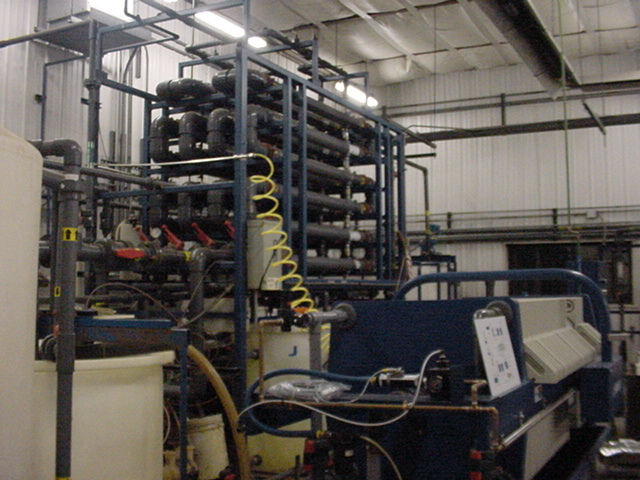
My clients have a tendency to hang around like bad habits — once awake to utility schemes, they take a bite and won’t let go. I’ve been blessed with an active bunch, and today I woke up to another example. Nancy “BOOM!” Prehn is one of my faves, she lives on top of the only natural gas underground storage dome in Minnesota, under about 10 square miles north of Waseca. She singlehandedly got an EAW on how the gas company was handling water. At the time, they were releasing water from wells onto their fields, and it wasn’t helping the corn and beans any. Turns out it wasn’t seriously polluted, and the gas company had to build a water treatment facility and storage tanks at each well to contain the water, and then suck it out, bring it over to HQ and run it through the treatment system before releasing it.
Nancy has a way of being ahead of the curve, and when she starts digging, look out. Now she’s working on tax credits for those with utility infrastructure on their land, like a natural gas dome! It’s needed for gas and oil pipelines too!
Here’s what she found today, from the 1979 legislative session, check Article 2, Section 20, a tax credit for landowners living under transmission lines — how did I not know this?
| Chapter 303 | HF1495 |
And it’s still law today:
How much is this tax credit? Well, it’s complicated… and there’s a ceiling, see the statute for specifics:
It was enacted during the last transmission build-out, circa 1979, and has been changed many times over the years:
History:
(2012-3) 1925 c 306 s 3; 1949 c 554 s 3; 1978 c 658 s 4; 1979 c 303 art 2 s 20; 1980 c 607 art 10 s 3; 1Sp1981 c 1 art 2 s 15; 1982 c 523 art 16 s 1; 1Sp1985 c 14 art 4 s 70; 1Sp1986 c 1 art 4 s 24; 1987 c 268 art 6 s 35; 1Sp1989 c 1 art 2 s 11; 1990 c 604 art 3 s 22; 1Sp2001 c 5 art 3 s 44; 2003 c 127 art 5 s 21; 2014 c 275 art 1 s 90
Note this one that changed it from any “high voltage transmission line” as defined by then PPSA 116C.52, Subd. 3, to a high voltage transmission line “with a capacity of 200 kilovolts or more”
which also happened in the Buy the Farm statute:
Bottom line — it’s good people affected by transmission get a tax credit for their burden, but it’s bad that it’s not assessed to the ones that took that easement. It should be assessed to utilities/energy companies, the ones causing it and benefiting from it, not the rest of us taxpayers who have to make up the difference for local governments who need the tax revenues.
TO DO: We need to make this tax credit applicable to all energy infrastructure (Note I said “energy” and not “utility” because there’s a lot of infrastructure being built that is NOT utility. but oil companies, and those “transmission only” private purpose companies.) and to assess the entity that burdened the property for the amount of that tax credit.
And in the Alaska Highway News…
August 3rd, 2015
They published my LTE in the Alaska Highway News:

Clean Power Plan? MPCA wants comments!
August 3rd, 2015
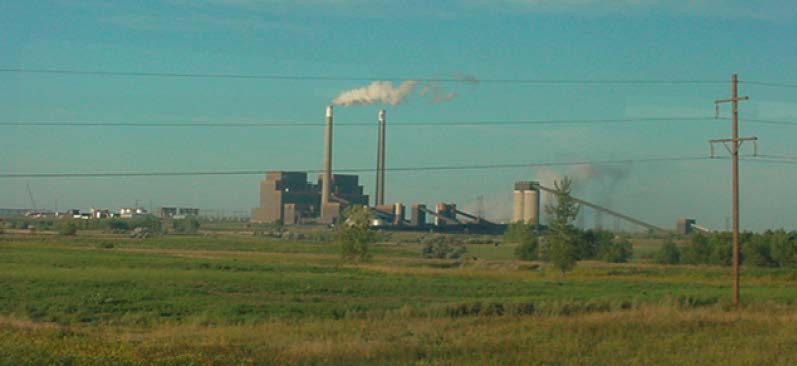 That’s the Coal Creek plant, a photo I took on a tour. If you’re an electric co-op member in Minnesota (elsewhere too?), they offer tours regularly, and it’s something you should do! Check your co-op’s newsletter for info.
State Register Notice:
Just released FEDERAL Clean Power Plan:
Clean Power Plan Final Rule (PDF)(1560 pp, 3.3 MB, About PDF) – August 2015
Look at how the “adjusted” Minnesota’s baseline levels due to Sherco 3 being out for nearly 2 years:
The EPA examined units nationwide with 2012 outages to determine where an individual unit-level outage might yield a significant difference in state goal computation. When applying this test to all of the units informing the computation of the BSER, emission performance rates, and statewide goals, the EPA determined that the only unit with a 2012 outage that 1) decreased its output relative to preceding and subsequent years by 75 percent or more (signifying an outage), and 2) could potentially impact the state’s goal as it constituted more than 10 percent of the state’s generation was the Sherburne County Unit 3 in Minnesota. The EPA therefore adjusted this state’s baseline coal steam generation upwards to reflect a more representative year for the state in which this 900 MW unit operates.
Clean Power Plan Final Rule (PDF p. 796 of 1560).
And from the state, which acknowledges imminent release of FEDERAL Clean Power Plan Final Rule , also released today, just in from the MPCA (direct quote):
The Minnesota Pollution Control Agency (MPCA) has issued a request for comments on possible rule amendments to bring Minnesota into compliance with the U.S. Environmental Protection Agency’s (EPA’s) Clean Power Plan. You can read the full request in the August 3, 2015, edition of the State Register, available at www.comm.media.state.mn.us/bookstore/mnbookstore.asp?page=register.
The amendments we are considering will help Minnesota meet standards established by the Clean Power Plan, which sets state-specific carbon dioxide emission targets and requires each state to submit a plan detailing its strategy for meeting the targets. As of State Register press time, we have not yet started drafting a plan because the EPA has not yet published the standards that Minnesota’s plan will need to meet, so the MPCA requests public input to help guide our considerations of methods for meeting the EPA’s targets, as well as any other objectives that the state’s plan might include.
Stakeholder meeting agendas, notes, and other related documents are posted on the website for this rulemaking at www.pca.state.mn.us/w9y3awr.
To access information about a particular Minnesota rulemaking, visit the Public Rulemaking Docket.