Calendars!! MN’s Nitrate rulemaking hearings
May 12th, 2018

There’s a rulemaking afoot, and rulemaking hearing. Usually rulemakings are the not-so-blind leading the blind, because by the time there’s a rule to comment on, the fix is in. It’s been decided how it will go, and the public comment period is just a box to check off. All the action occurs before it is released, the wrangling about language, the focus, all that is done by the agency in consultation with “stakeholders” who are typically the corporate sort that agencies regard as their “constituents” and there’s little public or advocate participation. That’s how it works. If we’re (we the people) are lucky, or if we really push for it, there’s an Advisory Committee, as authorized by Minn. Stat. 14.10:
I don’t see any evidence that it happened here. So… we have a proposed rule, and the comment period is now open, and hearings are being held in various spots in Minnesota.
There’s a hearing now scheduled for Red Wing (links to docs below), which was not in the original list:
Red Wing Nitrate Hearing
Tuesday, June 5
7:00 p.m. – 8:30 p.m.
Minnesota State College Southeast
308 Pioneer Road
Red Wing, MN 55066
Here’s the original schedule:
1:00-6:00 PM on Monday, July 16, 2018
Robert Boeckman Middle School
800 Denmark Ave
Farmington, MN 5502410:00 AM – 4:00 PM on Wednesday, July 18, 2018
Stewartville Civic Center
105 1st St E
Stewartville, MN 5597610:00 AM – 4:00 PM on Thursday, July 19, 2018
Minnesota West Community and Technical College
1450 College Way
Worthington, MN 5618710:00 – 4:00 PM on Wednesday, July 25, 2018
River’s Edge Convention Center
10 Fourth Avenue South
St. Cloud, MN 563019:00 AM – 3:00 PM on Thursday, July 26, 2018
American Legion
900 1st St E
Park Rapids, MN 5670
The “draft” rule has been released for public comment, but there was a first draft rule from June 2017. Below is the official draft, revised in April, 2018:
|
Groundwater Protection Rule (PDF: 328 KB / 26 pages)
Statement of Need and Reasonableness (SONAR) (PDF: 3.18 MB / 164 pages)
Notice of Hearing (PDF: 85 KB / 3 pages)
SONAR Appendixes (PDF: 15.73 MB / 208 pages)
COMMENT PERIOD:
- Initial Comment Period closes on July 31, 2018 at 4:30 p.m
- Rebuttal Comment Period: August 1, 2018 through 4:30 p.m. on August 7, 2018
Here’s where to send comments (note SEND TO OAH, and not Dept. of Ag):
https://mi1111esotaoah.granicusideas.comldiscussio11s/
or
Administrative Law Judge Palmer-Denig
Office of Administrative Hearings
P.O. Box 64620
Saint Paul, Minnesota 55164-0620
There are more specific instructions for filing comments on the OAH site:
Instructions: To comment, scroll down to “Topic: Submit a Comment” and click “View Topic.”Please make sure that your comments:
- Identify the specific part or subpart of the rule you are addressing;
- Specify whether you support or oppose the proposed rule language;
- Give reasons for your views; and
- Be specific and offer language changes to solve the problems you identify.
Attachments: Commenters may attach up to three documents to a comment. Allowed attachments include PDFs, spreadsheets, and word documents. Please include your name and contact information on all attachments.
I can’t stress enough how important it is to be specific, and to refer to parts of the rule that you’re commenting about. Vague rah-rah OR blah, blah, comments will have no impact, nor will form letters or postcards. Once more with feeling, be specific, and to refer to parts of the rule. Have at it!
What’s going on with Bent Tree?
May 1st, 2018
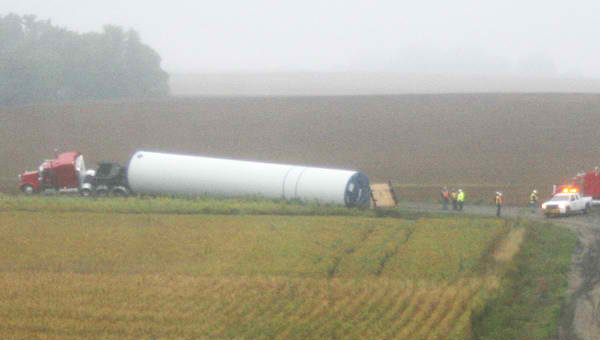
Update on Bent Tree. Filed earlier, Notice of Settlement Agreements:
And today:
And yesterday from EERA-Commerce:
20184-142562-01_EERA_Commerce_Comments
As for process going forward, Commerce recommends:

From WPL yesterday:
Next up – Public Utilities Commission meeting, the sooner the better.
Perspectives on the Line 3 pipeline decision
April 27th, 2018
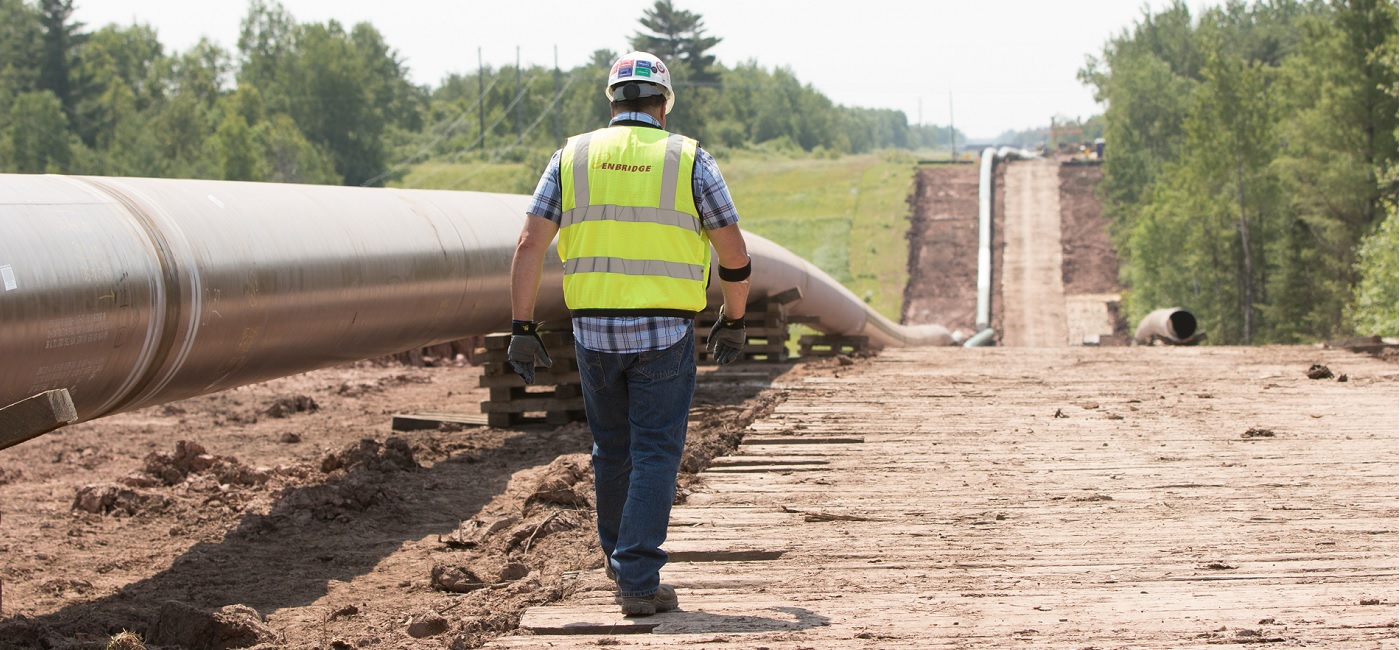 Fair use – from Enbridge’s Line 3 website
Looks like a lot of folks are angry with Judge O’Reilly’s Enbridge Line 3 decision.
Oh well… she had to make some decision and I think she did an excellent job of weighing all the factors, getting into the details in a very difficult case, and come up with a Recommendation that pisses everyone off! That’s something that takes a LOT of work and is very hard to do!
Here’s a post on it with an insightful/inciteful framing of the decision and what it means:
Pipeline “poison approvals”: a new trend?
In the press, people are getting wound up. From MPR:
Dayton: No ‘viable way’ to build new Line 3 pipeline on current route
From the MPR piece: The Leech Lake Band of Ojibwe has denounced the judge’s recommendation, calling it “a clear attack on sovereignty and Tribal communities.”
My take is that O’Reilly laid out the Leech Lake Band’s sovereignty and power and the lay of the land as it exists now — the easements are there now, allowing Enbridge to use the land until 2029. This recommendation sets the stage for the easement renegotiation in 2029, where the Band has power to say “NO!” and Enbridge is very afraid of that, facing either outright refusal or greatly increased easement payment as the obvious outcome. This Recommendation, and use of the existing easement gives Leech Lake greater leverage going forward, and might even move those easement negotiations up in time. If that renegotation is a decade in the future, Enbridge will also by then be operating in a very different world than exists right now, with decreased oil use and demand. O’Reilly also noted that if a new corridor were used with this, given state non-proliferation, Enbridge would logically seek to use that corridor for all its pipelines going forward.
Along this line (but note that LaDuke, Honor the Earth, is the one quoted, and there are no quotes from Leech Lake or Fond du Lac tribal officials, who should be the ones weighing in here):
Minnesota Pipeline Ruling Could strengthen Tribes’ Legal Case Against Enbridge Line 3
And more, this with quotes from tribal officials:
Major pushback against Line 3 recommendation
In a statement Tuesday, April 24, the Leech Lake Band of Ojibwe described the recommendation as “anti-sovereignty” and said that it “puts undue burden on the Leech Lake Band of Ojibwe to hold the risk of the pipeline replacement and to revoke the permit.”
“The judge has made this horrific recommendation without even holding a single ALJ hearing on the Leech Lake Reservation and gave a recommendation on a route that has not had the same level of environmental review,” wrote Ben Benoit, the band’s environmental director.
Once more with feeling — If you have comments, objections, there’s been a notice issued regarding submission of “Exceptions” which are due May 9, 2018:
20184-142282-01_Exceptions Notice
Enbridge Line 3 pipeline – ALJ Recommendation released
April 25th, 2018
 Line 3 proposed and alternate routes
The Administrative Law Judge’s Recommendation is out:
Enbridge should be glad they got this Recommendation. There’s something for everyone in this decision, and there’s something for everyone to object to — which tells me it’s a job well done. It’s a fascinating read, exposing the misrepresentations of Enbridge about quite a few material issues, particularly about Enbridge circumventing FERC requirement of removing the pipeline, the paucity of the “jobs jobs jobs” claim, and the need to renegotiate easements with tribes, which factors into Enbridge’s “inexplicable” easement acquisition for up to 4 pipelines as it finagled for this Line 3. READ THE Findings of Fact, Conclusions of Law, and Recommendation! Judge O’Reilly did a great work in digging through the literally tons of materials in this docket. The misrepresentations and omissions are so blatant that there’s a firm basis for requiring disclosure and correction of their application, and were I the ALJ, outright denial of their application! They’ve been caught. It’s all well documented in the Recommendation.
Something near and dear to me about this — note the “SA-04” alternative route — it goes right through two of the Freeborn County townships dealing with the Freeborn wind project. Notice? See p. 47-48.


Guess the Certificate of Need “Notice Plan” and notice requirements are worthless…
Apparently the karst is more important than notice:
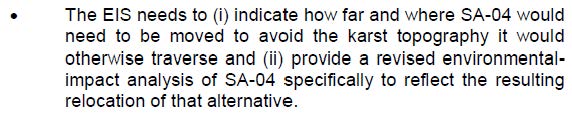
And the DNR supported this option?!?!
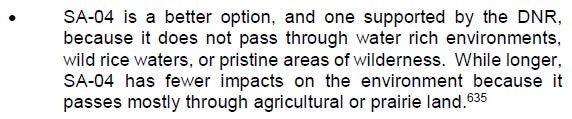
However, SA-04 was deemed not a viable alternative:

If you have comments, objections, there’s been a notice issued regarding submission of “Exceptions” which are due May 9, 2018:
Here’s how this is interpreted by the press:
‘There’s a ton riding on this’: Enbridge pipeline project dealt blow in Minnesota
Enbridge faces new Line 3 setback in Minnesota ruling
Judge: Enbridge Line 3 project should follow existing route
Ruling: Minnesota regulators should approve new Line 3 pipeline — if it follows current pipeline’s route
More FAKE NEWS from Center of the American Experiment
April 21st, 2018

Center of the American Experiment is at it again, twisting obvious facts, and losing credibility in the process, well, not that they have any… They must be getting paid big bucks to continue this distortion and disinformation campaign. And maybe it’s just an attempt to get their name out there, as if they’re a “think” tank, and not a tank of hot air.
Your Taxes, My Friend, Are Blowing in the Wind
There are issues with wind, particularly about siting — the way projects steamroll into communities, putting up turbines too close to people who are already there — bringing the nuisance to the people where the community does not consent. Very valid issues, particularly where wind companies, on top of that, are violating their permits. We as a society need to address these issues now so that people are no longer steamrolled, and we need to figure out a way to deal with projects already improperly sited. If not, well, it’s hard to imagine how any wind project could be sited going forward!
What’s Center of the American Experiment up to? This time, it’s about wind subsidies, and they’re again milking that bogus report for whatever they can — please read it carefully and rip it apart — it’s not worth the mb it’s printed on:
What’s wrong with their take on subsidies? Well, they’re on a rant about taxes and pick out wind subsidies, because they want to bash wind, but they don’t address the subsidies for all other sorts of generation. DOH! That means that the issue isn’t subsidies, it’s wind.
Worse, they start out about Warren Buffett and tax benefits he gets from his wind projects. Yup, that’s there. But earth to Mars, he has a lot more invested in coal.
Warren Buffett owns BNSF which ships coal around the Midwest. BNSF is also a major Bakken BOOM! oil transporter, the impetus for the $5 billion Amtrak deal with BNSF for rail, crossing, and safety upgrades.
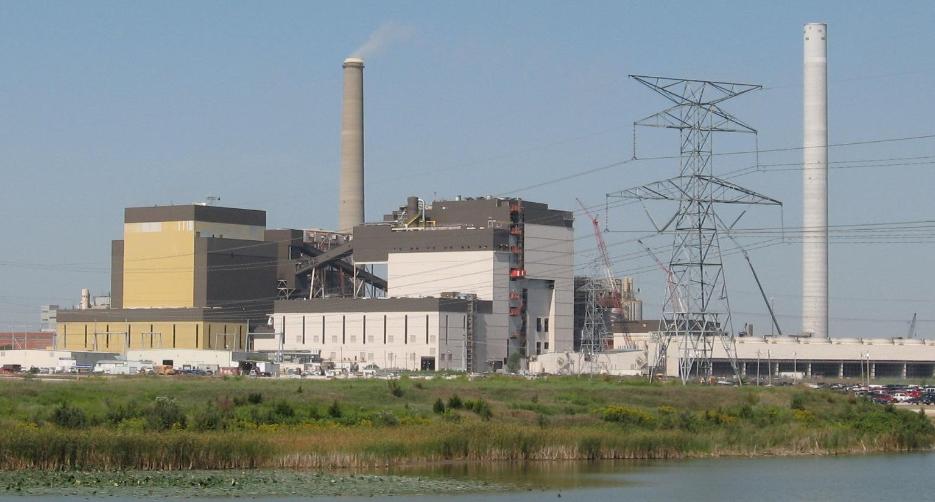
Warren Buffett owns the MidAmerican Energy Center, 4 coal plants, which includes the “Walter Scott, Jr. ” 790 MW coal plant — the largest in Iowa. It cost $1.2 billion to build, and was completed in 2007, just in time to start utilizing the biggest transmission build-out in history!
Just the Facts – Walter Scott, Jr. Energy Center’s New 790 Megawatt Unit
Center of the American Experiment says about transmission that:
Transmission is needed for all generation, none but rooftop solar is at the load. Cost of transmission is not in any PPA. FERC requires that transmission not discriminate against or favor particular types of generation — what is there is what goes over the wires. And whatever the generation source, cost of transmission does show up in rates. Utilities get more from capital investments, a/k/a as transmission, than from selling electricity.
And then there’s the basis for that transmission build out — to displace natural gas with coal:
And “the cost of running conventional power plants as backup sources of electricity” Natural gas peaking plants are what’s used for backup for wind, they kick in only when needed, and that’s not often. Further, solar follows peak. Back up occurs when the variable source isn’t running, it’s not simultaneous, not duplicative, DOH! It’s duplicitous!
As to rates: Xcel’s rate case 15-826, is there for reading, but you seem to ignore the filings. Center of the American Experiment has been silent on Xcel’s e21 “business plan” rate scam and the current bill to change cost review and rate recovery for Prairie Island. Where’s theirconcern about rates when rates are at issue? Oh, right, weighing in on a rate case might involve facts.
Enough of Center of the American Experiment’s repeated disinformation, misstatements… just stop.