Zippity do dah, zippity NAY!
February 4th, 2024

Today, the STrib reports another high-speed option between Metro and Rochester:
A 700-mph tunnel between Twin Cities and Rochester? Group wants $2M from Met Council for ‘hyperloop’ study.
Haven’t they learned anything from Zip Rail?
Zip Rail’s dying gasp…
Apparently not here. And the federal Department of Transportation has issued guidance!
HYPERLOOP STANDARDS DESK REVIEW
Non-Traditional and Emerging Transportation Technology (NETT) Council
Back in 2020:
San Francisco To L.A. In 35 Minutes? Elon Musk’s Hyperloop Moves Closer To Reality
Closer to reality? Not quite… Though Musk’s hyperloop did not go far, it just so happened to go belly up at the end of 2023!
The hyperloop is dead for real this time
So now, those workers are looking to move on???
A couple of sentences here caught my attention, and I’m wondering…
Hyperloop One to Shut Down After Failing to Reinvent Transit
DP World, the Dubai-based conglomerate, has backed Hyperloop One since 2016 and owns a majority stake. The startup’s remaining intellectual property will be transferred to DP World, a person familiar with the situation said.
https://www.bloomberg.com/news/articles/2023-12-21/hyperloop-one-to-shut-down-after-raising-millions-to-reinvent-transit
Is DP World involved in this reincarnation of the failed Musk Hyperloop?
Just NO! Do we need to go through this again?
MN PUC – How To eDockets
February 1st, 2024

Who cares about the Minnesota Public Utilities Commission’s eDockets system? We all should care! It’s the best way to keep up with what’s going on in the docket, what others are filing, what issues are being raised, what’s the status, and to track all NOTICES, which will tell you of hearings, comment windows, orders, and pay particular attention to those from PUC, OAH (Office of Administrative Hearings), and EERA and DER (Commerce). Also look for comments from individuals and note their concerns.
How to get to eDockets? First go to the PUC’s Main Page (see above) at https://mn.gov/puc then click “eDockets” and you get this and click “eDockets” again:

Then you’ll get to this screen:
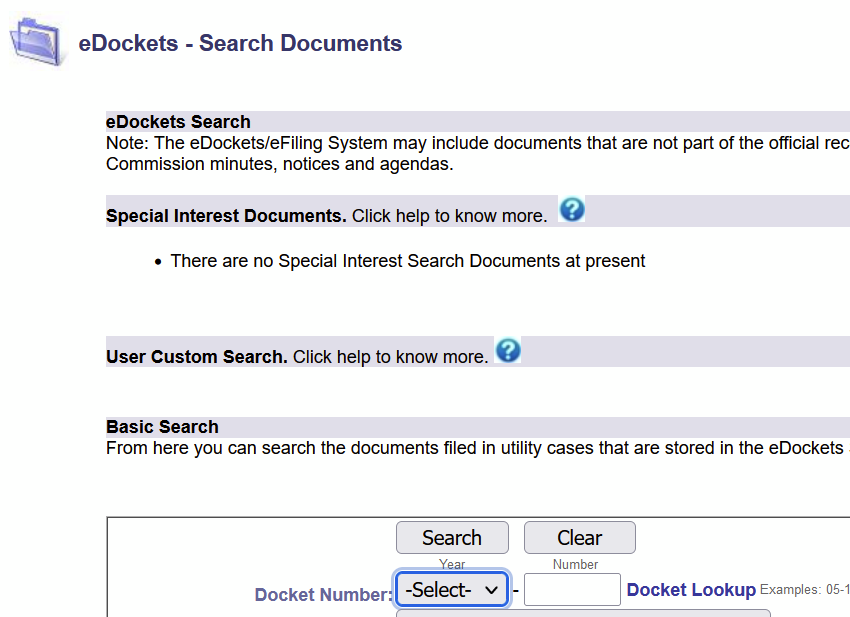
At “Docket number -Select” scroll to “22” (the year) and at “Number” enter “131” for Certificate of Need, or “132” for Route docket (and for other dockets, same routine, enter the year and docket number, and there you are!). And for sure look at both. Then click “Search.” (when there are multiple dockets, as with the MN Energy CON, be sure to check both dockets, one at a time). This works for any docket, like the 800MW RFP docket, E002/CN-23-212, plug in year “23” and Number “212” and there you go! Spend some time playing with it to get acquainted, it’ll become second nature soon.
When you get to the docket, as below, click on the far left link in a row to get that filing in that row. Do it a few times, and it’ll be quick and easy! If in active for a while, it will boot you out and you get to start over.
Also, “subscribing” is important to keep up to date on what’s being filed. When there are multiple dockets, be sure to subscribe to both!
To subscribe, when you get to the docket, note the column for Subscription and boxes, as in lower right here:
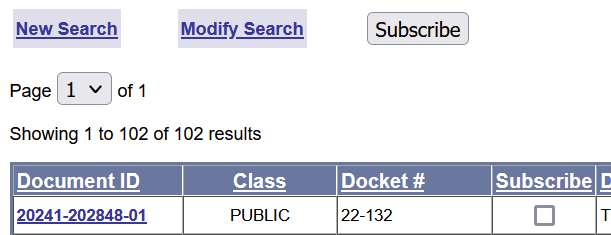
Click one of the boxes in that subscribe column, any one (above on lower left), and then click the link above “Subscribe” and you’ll go to this screen:

Enter your email address, and for “Type of Subscription” enter “docket” and then you’ll have to enter the docket(s), and then “Add to List.” You’ll get a confirmation email, click and confirm, and there you are!!
When you get emails about the docket, it will have the docket number, and as they come in, pay particular attention to Notices, as there will be dates that are important, meeting/hearing dates, deadlines for comment, etc.
Now, get to it. LOTS of reading, and as you go, you’ll get familiar with it and the process. IT WILL GET EASIER!!
Now for the fun part — FILING IN eDOCKETS! Why file in eDockets? When you file in eDockets, you know what you’ve submitted has been received and is part of the record, and so others can know what your concerns are — it’s SO important to know you’re not alone in this!
To file, first you have to register. In that first eDockets screen go to upper left corner:
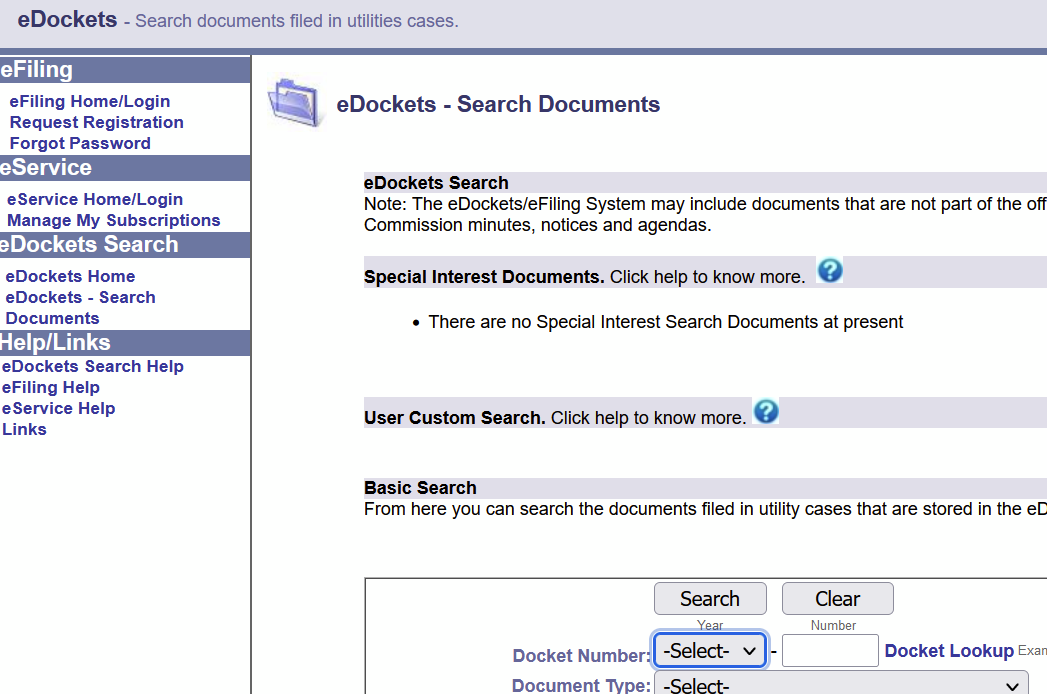
Where it says “eFiling”, register by clicking on “Request Registration.” You’ll get this screen:
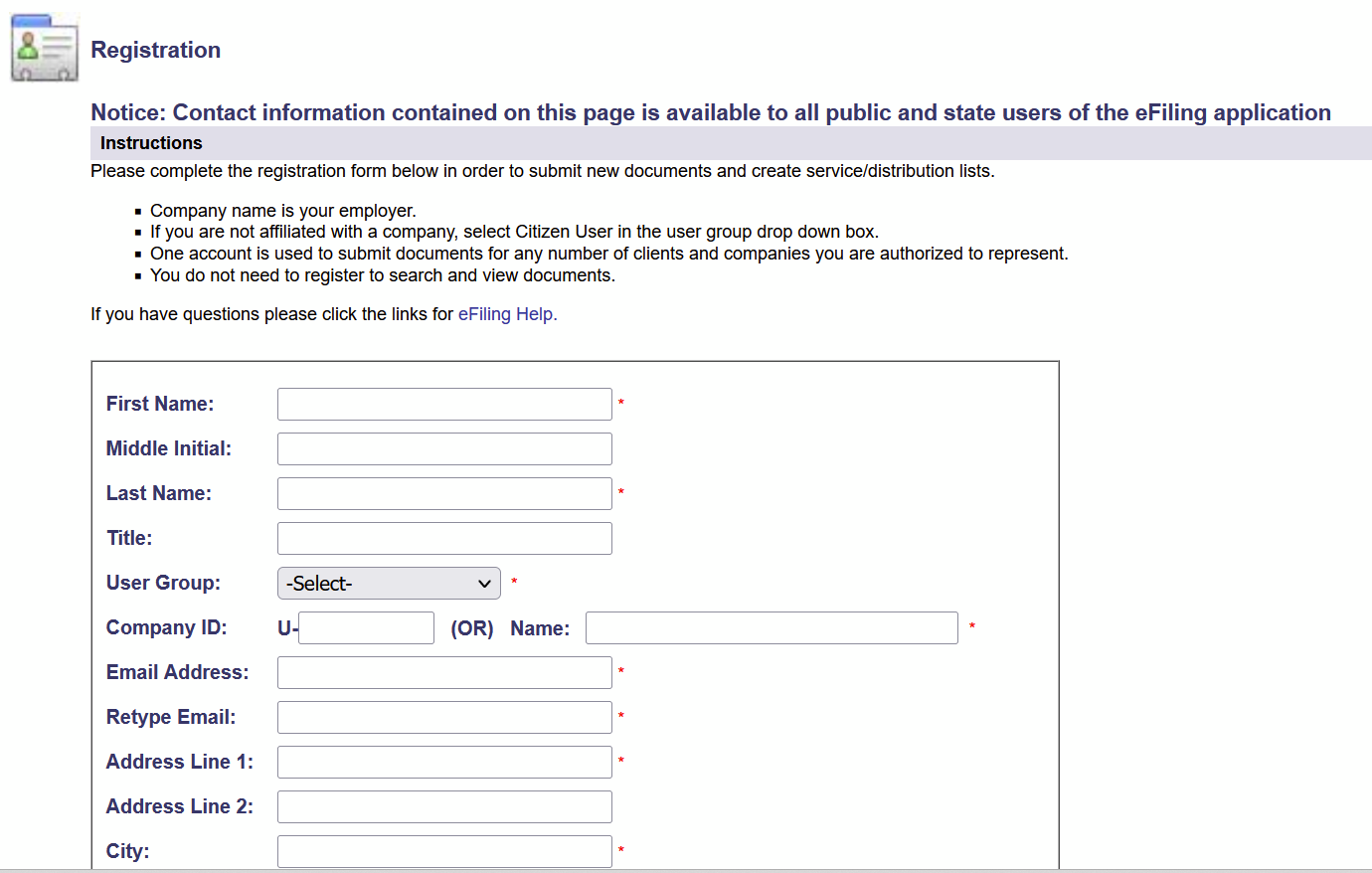
Fill it all out, click for electronic service — Do not get into paper in these dockets, it is a royal pain, and sending out paper copies to everyone is EXPENSIVE. Click “Submit” and you’ll get confirmation email, confirm, and you’re all set.
To eFile after you’ve registered, click “eFiling Home/Log In” and follow the directions.
WHEN THERE ARE MULTIPLE DOCKETS, BE SURE TO FILE IN BOTH! For the MN ENergy Connection, be sure to write “route” comments with those on-the-ground issues you know best because you’re right there, and also be sure to write comments on “need” because that’s the overarching issue — if the Commission determines it is not needed, it won’t be built — and if it IS deemed needed, it’s a matter of where, and routing is an ugly mess and can devolve into a “STICK IT THERE” struggle. Always address the (lack of) need issues, as that’s the only real way to stop a project.
If you need help on eFiling, contact the Commission’s Public Advisor Charley Bruce — charley.bruce@state.mn.us
Once you take the time to sign up, and get familiar with it, you’ll see how easy it is to keep up with what’s going on, and how easy it is to eFile — and last minute!! So easy, I’d be lost but for eDockets and eFiling, you have no idea how awful it was to make paper copies of all filings, and mail them to everyone, whew, it was beyond difficult, and so expensive. Now, it’s a “work from home” easy-peasy process, the best ever change in PUC process, and pretty much everywhere across the country, in administrative proceedings like this, and in most every court system too. Participating, practice, was so much harder before.
Transmission road show continues…
January 31st, 2024
FYI: MN PUC – How To eDockets
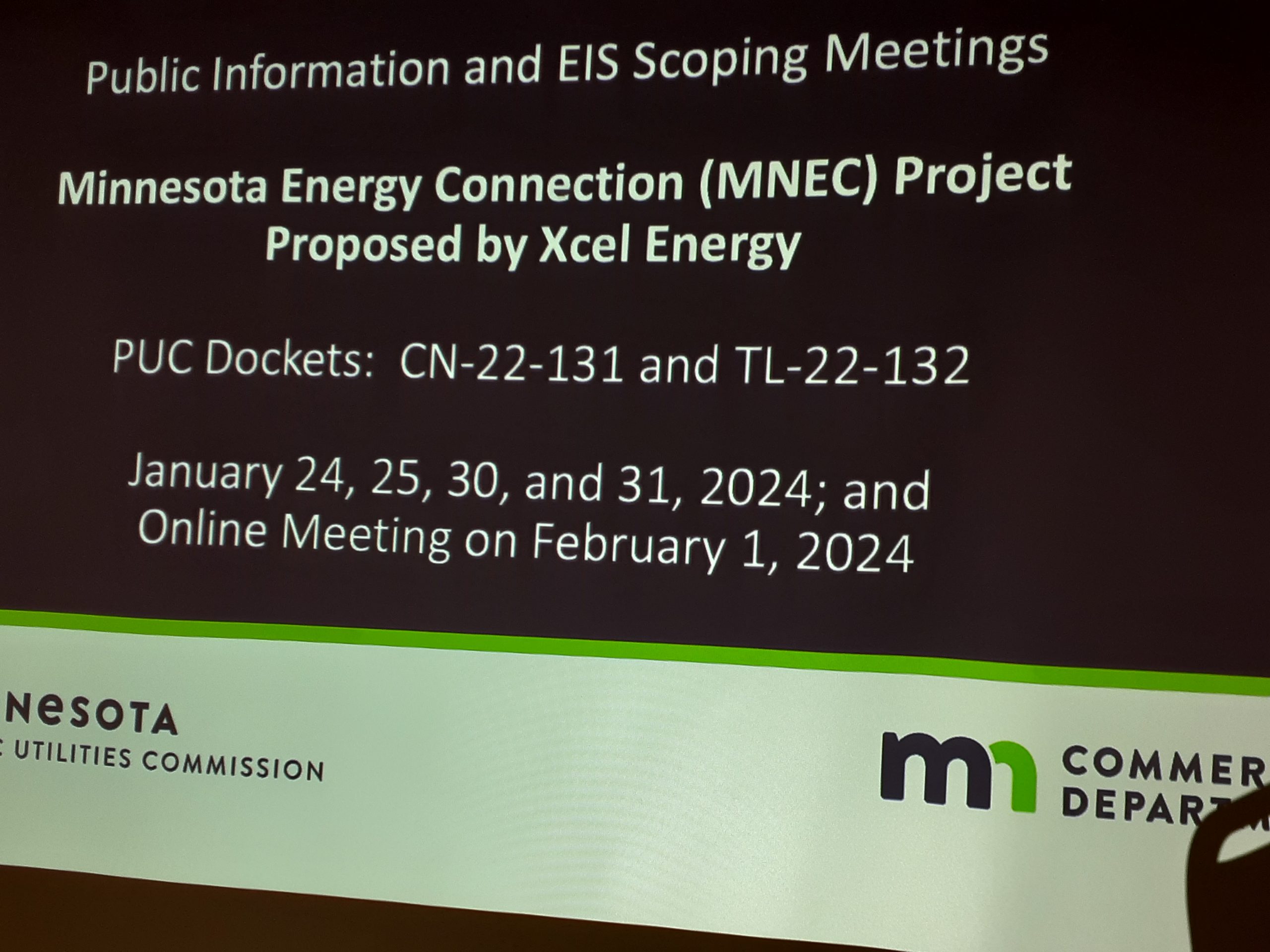
The last two weeks have been scoping meetings for the Environmental Impact Statement for the “MN Energy CONnection.” Per Xcel’s site, “You can read the Certificate of Need filing here and the Route Permit application here.” I don’t see the word “REVISED” on this…
Here’s the REVISED Certificate of Need application:
And here’s the Route Application:
Route-Application App C are the maps — TOO LARGE — see eDockets
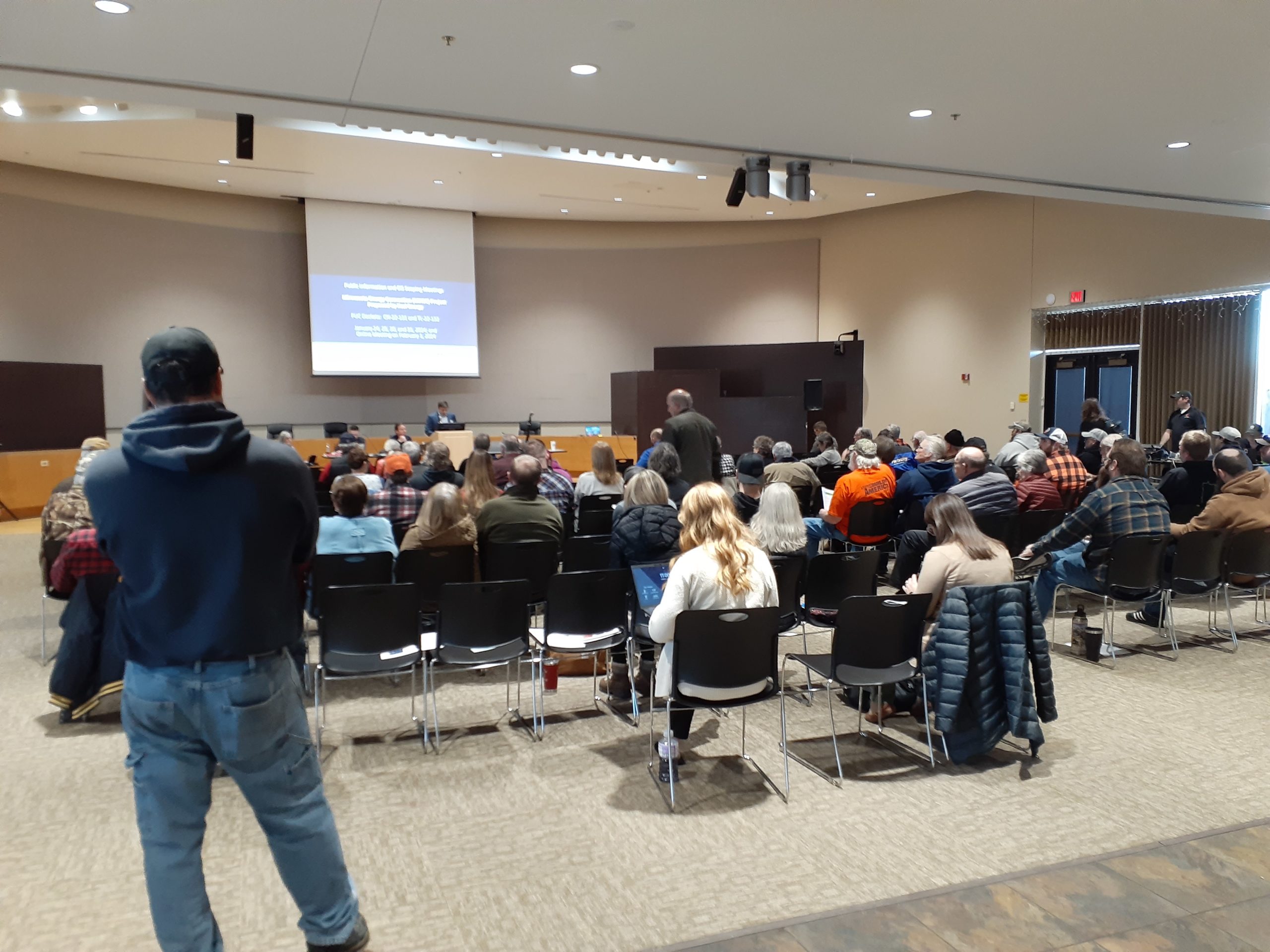
So many people getting notice of the “MN Energy CONnection” transmission line have CapX 2020 in their yard, and they are PISSED! It was standing room only last night in Litchfield, 100 of my flyers gone and folks were still filing in. Again this morning in Monticello, over 100 again:
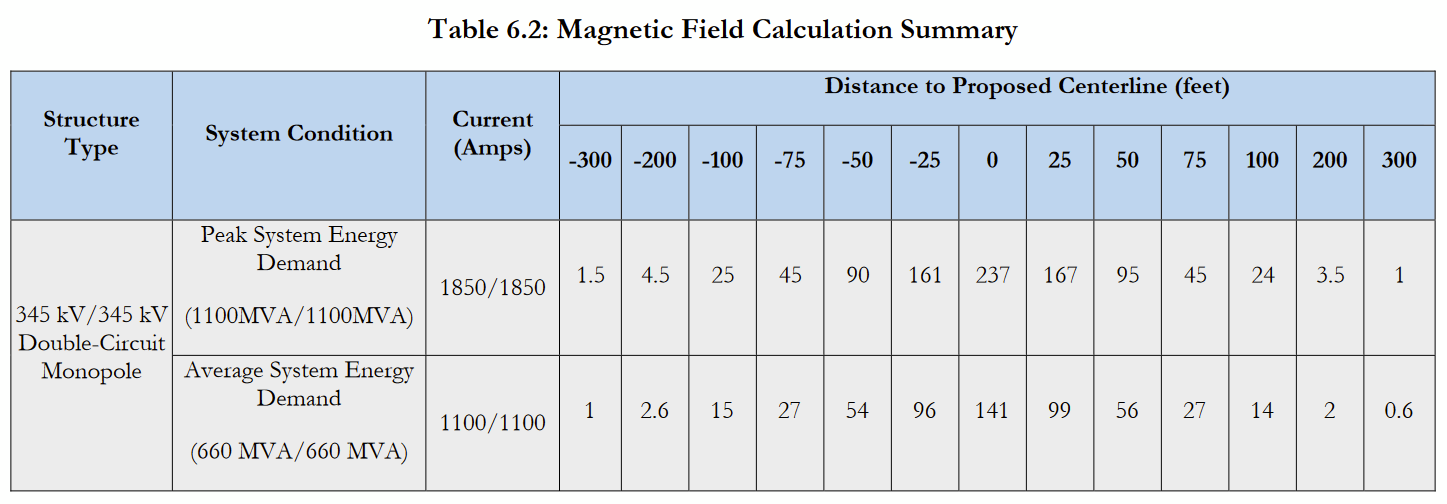
Several this morning brought up EMF and the magnetic fields. The magnetic fields from the “REVISED” application are cause for concern — look at their modeling levels shown for the edge of the Right of Way:
Anyway, there’s a lot tocomment about, things that should be included in the EIS. But now’s not the time to write. More later.
Federal transmission permitting authority grab
September 9th, 2023
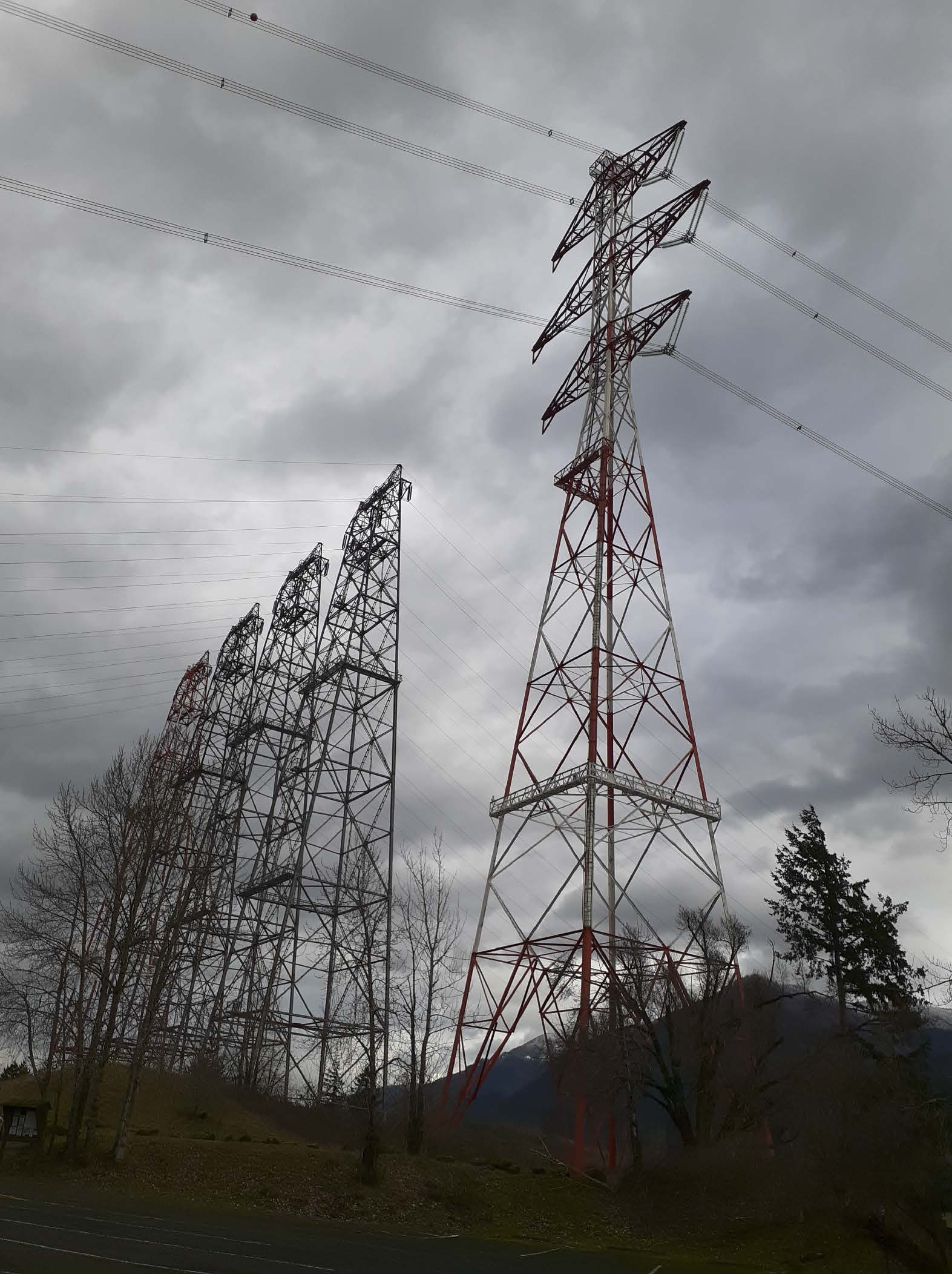
My head is going to explode… they’re trying again to expand geographic areas branded “National Interest Electric Transmission Corridors” and Designation of NIETCs with expanded criteria triggering the opening for the feds to grab that permitting authority. They call it a Transmission Facilitation Program. Their dreams of transmission are based on the DOE’s National Transmission Needs Study. Compare that with the most recent NERC Long-Term Reliability Assessment. The DOE is for some reason not relying much on the “NERC Report.”
And along with that, there’s THIS rulemaking, to establish procedure for federal review of transmission proposals. I was reminded of this rulemaking thanks to a DOE Grid Deployment Office email, so here’s a reminder for all of you!
There was a webinar a couple weeks ago, I did participate, got nominal comments in, but this needs serious work on detailed well-founded comments. From the DOE page:
DOE is now seeking public comment and feedback on the proposed CITAP Program via a Notice of Proposed Rulemaking. Comments must be received by11:59 p.m. ET on October 2, 2023.
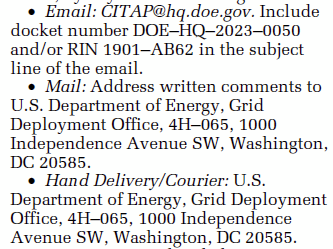
Really, READ THIS and get to work:
Campaign Finance Rulemaking Comments due Sept 22!
July 26th, 2023

Hot off the press from Campaign Finance and Public Disclosure Board, a notice of rulemaking. Here’s the pdf of the Notice – it’s very intense and detailed, a lot crammed into four pages:
Comments are due by September 22, 2023. Send to:
Andrew Olson (andrew.d.olson@state.mn.us)
Campaign Finance and Public Disclosure Board
190 Centennial Office Building
658 Cedar Street
St. Paul, MN 55155
And the email from Campaign Finance:
To: Interested members of the public
The Campaign Finance and Public Disclosure Board is considering adopting, amending, and repealing administrative rules concerning campaign finance regulation and reporting, lobbyist regulation and reporting, and audits and investigations. The Board may consider other rule topics that arise during the rulemaking process. A copy of the Board’s Request for Comments, published today in the State Register, is available at cfb.mn.gov/pdf/legal/rulemaking/2023/Request_for_comments.pdf.
Three Board members will serve on a subcommittee that will work with staff to develop the proposed rule language. The subcommittee meetings will be open to the public and interested parties will have the opportunity to comment on the proposed rule topics and language. Information related to the rulemaking, including how to comment, how to sign up for the rulemaking notice list, the dates of upcoming subcommittee meetings, copies of official documents, and draft rules when they are ready, will be posted on the Board’s rulemaking docket webpage at cfb.mn.gov/citizen-resources/the-board/statutes-and-rules/rulemaking-docket/.
You are currently subscribed to the Board’s rulemaking notice list. If you no longer wish to receive notices regarding the Board’s rulemaking efforts, please reply to this email or unsubscribe using the form on the Board’s rulemaking docket webpage linked above. Please contact me with any questions or concerns related to rulemaking.
Respectfully,
Andrew Olson
Legal/Management Analyst
651-539-1190
andrew.d.olson@state.mn.us