Siting and Routing Utility Infrastructure
January 13th, 2025

December 10, 2024 was the Power Plant Siting Act Annual Hearing. It was before ALJ Christa Moseng, and there were very few commenters. I’m not seeing any minutes, and don’t know if they’ll ever be posted. There were only two of us commenting, myself, and Dan Wanbeke, who has a CapX 2020 line on his land. If the proposed MN Energy CON line is built, he could be surrounded by transmission.
Wanbeke gave a detailed description of his experience and takeaways, one of the most important was a comment of the PUC’s Bob Cupit (since retired):
There are winners, and there are losers.
A very interesting part of Wambeke’s testimony was regarding the stray voltage problem, all the water in their farm was energized, and the shower tested at 15 VOLTS! The local utility has been out many times, and when Capx 2020 was down for a brief time, no stray voltage, and when it was again energized, the stray voltage was back. He testified about induction current, that when there’s a distribution line running parallel to a massive transmission line, there can be induction current (this also happens with pipelines), and the distribution lines are indeed parallel with CapX transmission. This is NOT rocket science, and the CapX utilities better deal with this. If meeting minutes come out, I’ll post, though the thought occurs to me that this was a “hearing,” so it will probably be a top secret transcript. Will keep an eye out.
These next two tidbits were handouts at the hearing:
And now on to comments filed since:
FYI, the DOT “Policy of Accommodation” that should be entered in every docket, because it sets out how utilities can interact when projects are proposed near roads — I’ve observed cases where the utility paid no attention to DOT comments and landowners nearby were screwed with little notice because utility had to quickly alter plans because DOT would not allow planned placement:
On to the regular folks, so far just two of us!
I’d made oral comments at the hearing (via web), but had to put it in writing to be more specific, because the changes are immense, and there needs to be a record. As I said in my Comment, not for the first time, “I’m disgusted, frustrated, incensed, and committed to showing up before the Public Utilities Commission until I drop dead someday in the large hearing room.” I had to file a corrected version, was bleary-eyed and found typos, missing words and punctuation, and FYI, the first one below has been corrected:
This one, from Kristen Eide-Tollefson for CURE, Communities United for Responsible Energy, is important because she’s seen the changes over the decades, THREE decades, of dealing with the Power Plant Siting Act. Now it no longer exists, hence Eulogy for the PPSA:
Let’s trot out this one again, we’re overdue for a Transmission Transition:
PPSA Hearing is OVER
December 10th, 2024
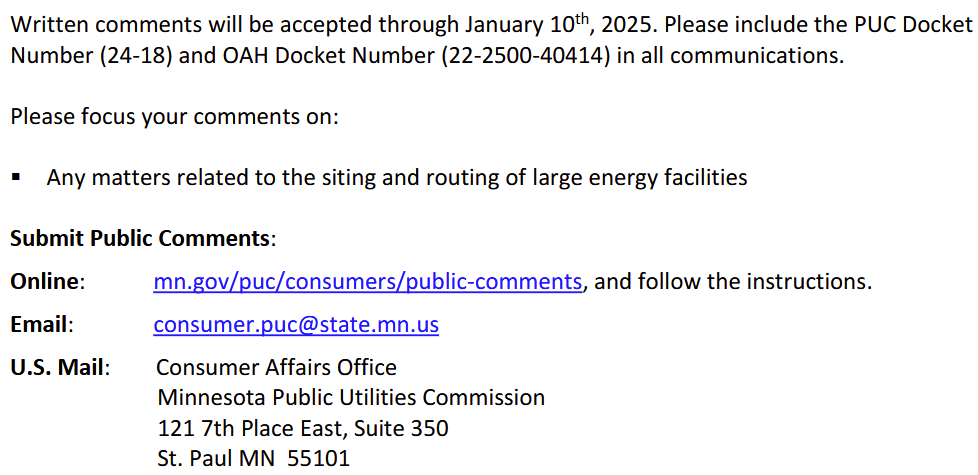
An hour in utility futility! The Power Plant Siting Act annual hearing is over. Comment period? Here’s how:
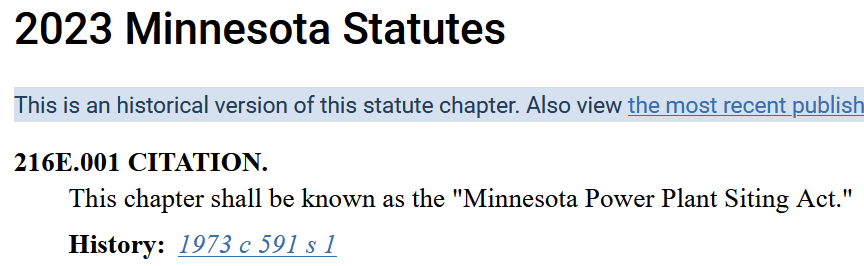
The most important thing I see is that as of this legislative session, THE POWER PLANT SITING ACT NO LONGER EXISTS! Minn. Stat. Ch. 216E was the Power Plant Siting Act:
But now? It’s all been repealed and renumbered, and RENAMED under a different chapter:
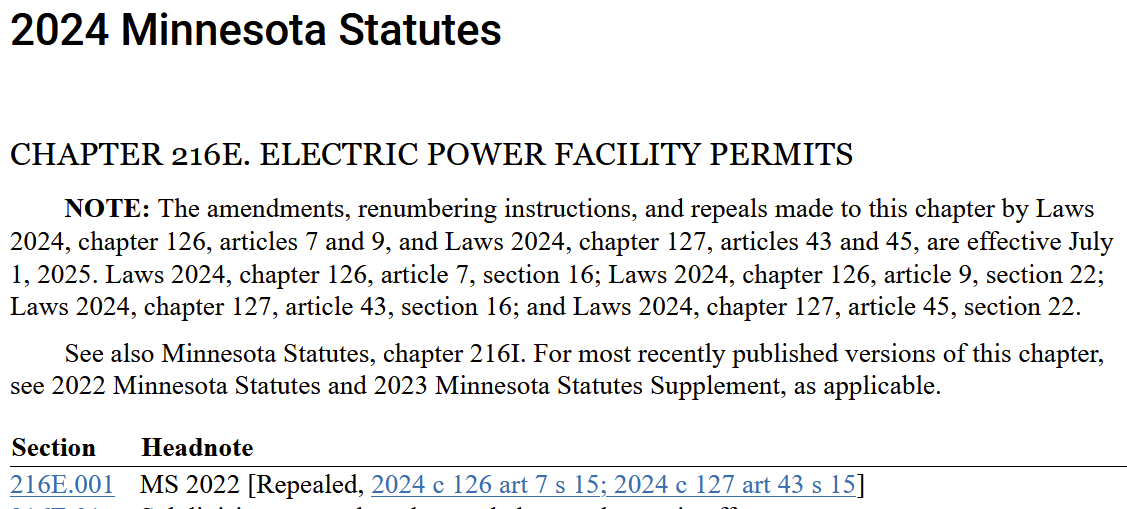
And permitting statutes were repealed, amended, and then renumbered and sent over to a new “Chapter 216I.” Click that link to check it out.
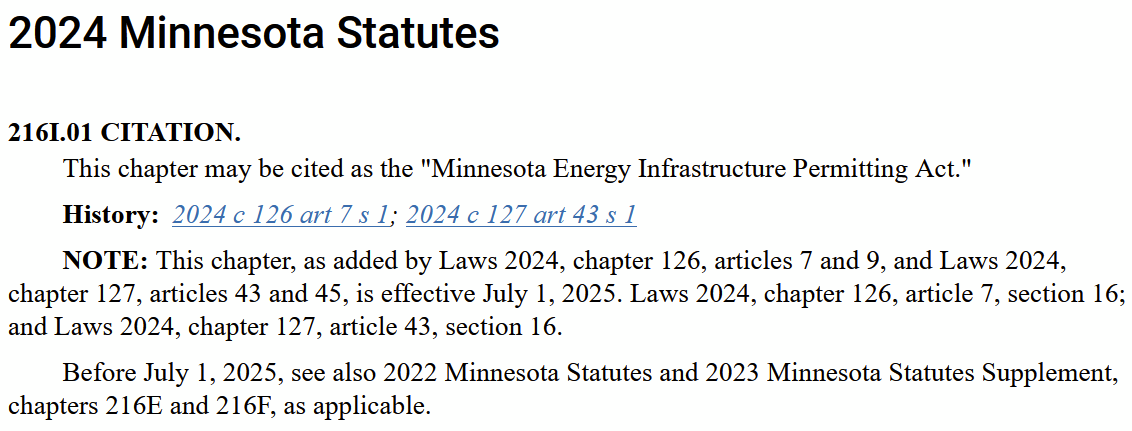
What does it mean for siting and permitting if the Power Plant Siting Act is repealed? Kinda don’t want to think about it.
Prairie Island dry cask DEIS Comments filed
December 7th, 2024
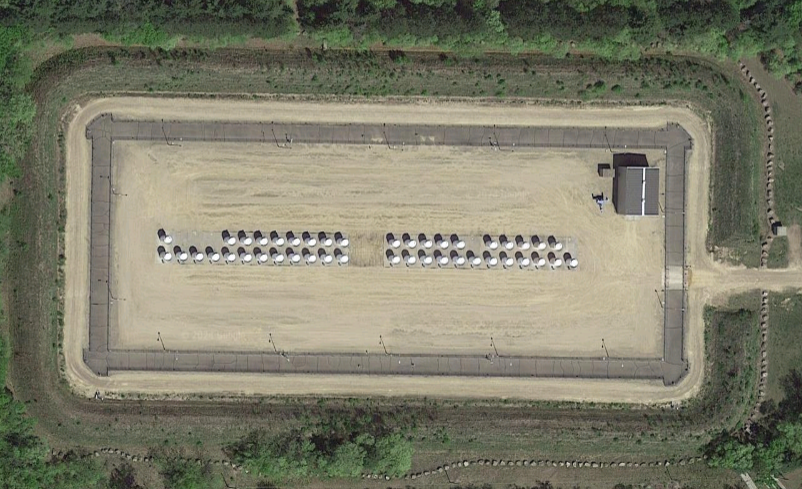
It’s no work of art, but in the scenario this proceeding is in, with Prairie Island Indian Community and City of Red Wing deep in it with or working on agreements with Xcel Energy, there’s not much we can do, little impact, as they’re the players, and also, AAAAACK, I just didn’t have time.
The DEIS did grossly misrepresent the history and status of Xcel’s Utility Personal Property Tax payments to local governments, so I did include the City of Red Wing comment in the IRP (below page 13, Attachment A).
The main purpose of this is to push for reworking of the “low-dose” radiation exposure modeling using Aaron Datesman’s cutting edge Three Mile Island “shot noise” work to correct for the GIGO current modeling and more accurately characterize the risk.
Sooooooo, anyway, here’s what I filed:
Delaware cancer rates — note 19731
July 4th, 2023
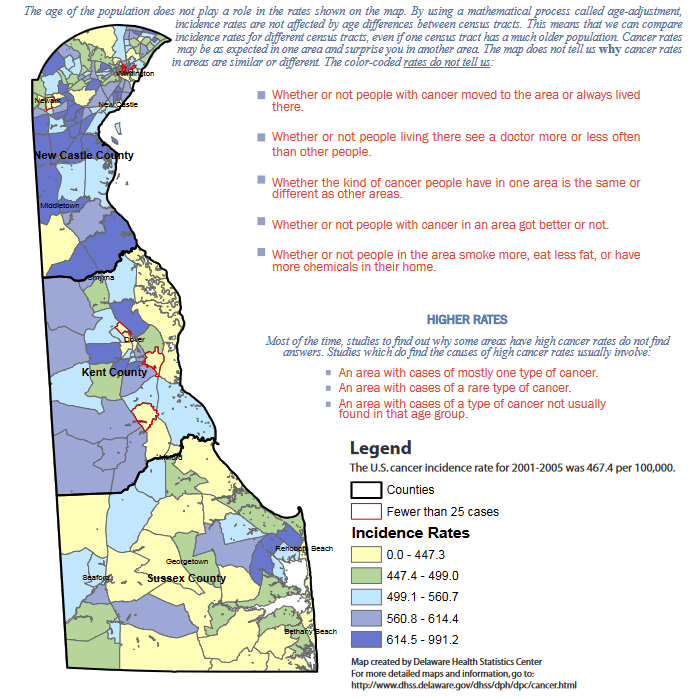
Yes, every picture tells a story, worth a thousand words… Alan Muller, Green Delaware, spent decades fighting the polluters of Delaware, concentrated in New Castle County, and the Indian River coal plant way south (and surrounded by cancer), and many other polluters in Delaware and beyond.
A few maps of Delaware cancer rates… from this article about articles in the Snooze Urinal (as Alan calls the News Journal):
Cancer Clusters in Delaware? How One Newspaper Turned Official Statistics into News
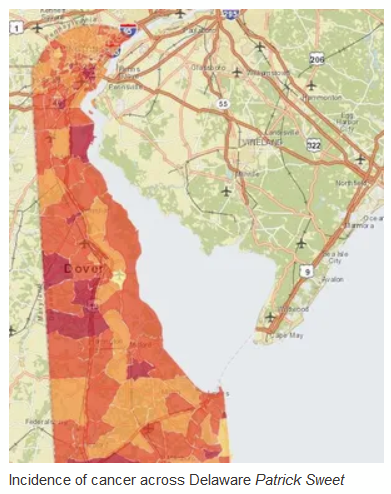
Alan’s Port Penn, DE is in this area on the bay, just south of the C&D Canal, dark red in the map above, dark blue in the maps below:
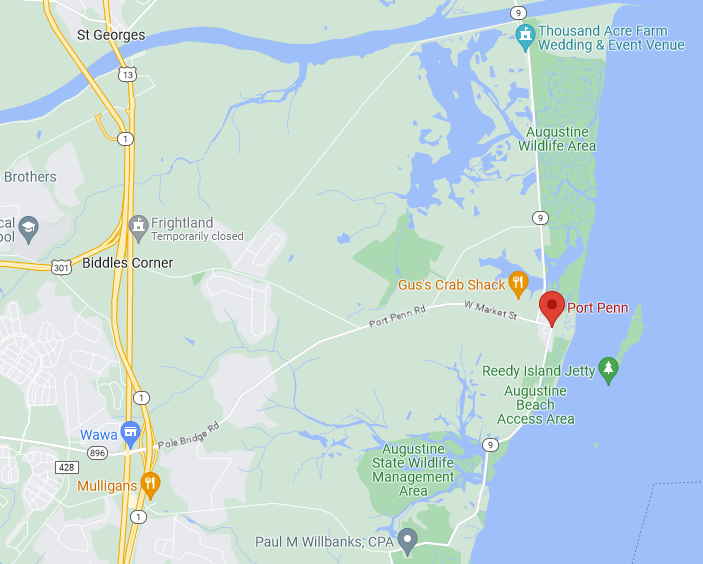
Cancer Cluster Investigations in Delaware
And from the state’s Division of Public Health:
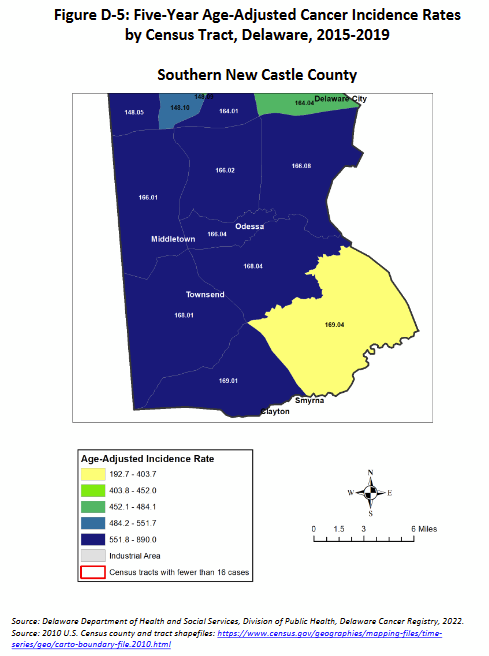
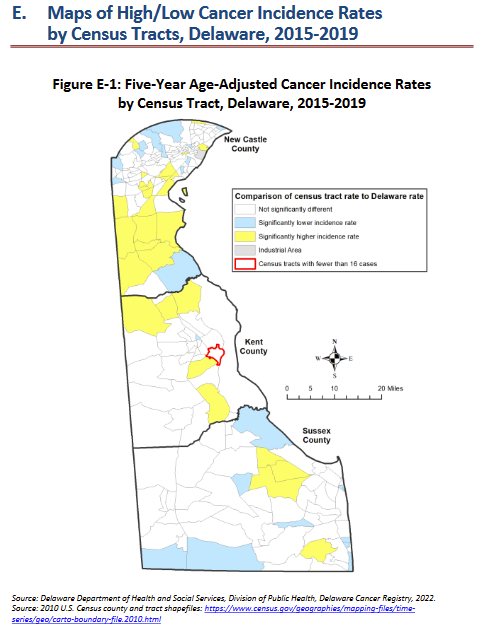
CENSUS TRACT-LEVEL CANCER INCIDENCE IN DELAWARE, 2015-2019
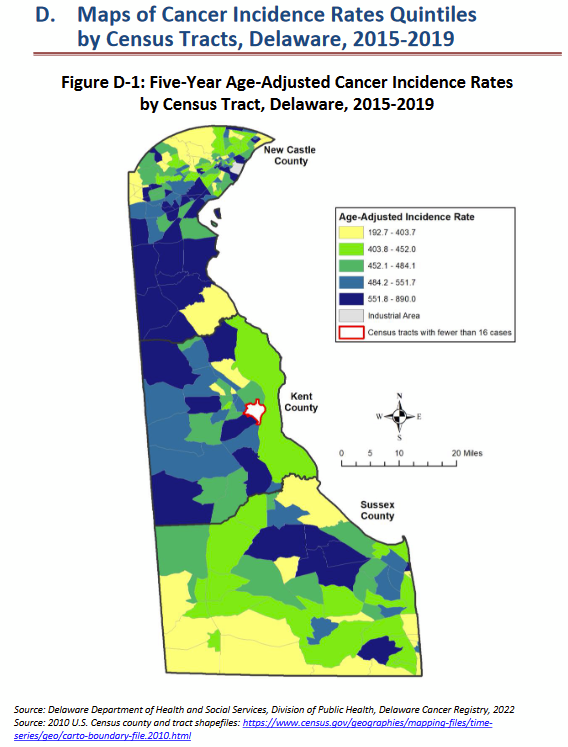
Port Penn, DE is in the dark blue census tract on eastern edge, south of Delaware City, that bumps out into the Delaware Bay (166 incidence rate on map):


PPSA Annual Hearing in EQB Monitor
November 3rd, 2022
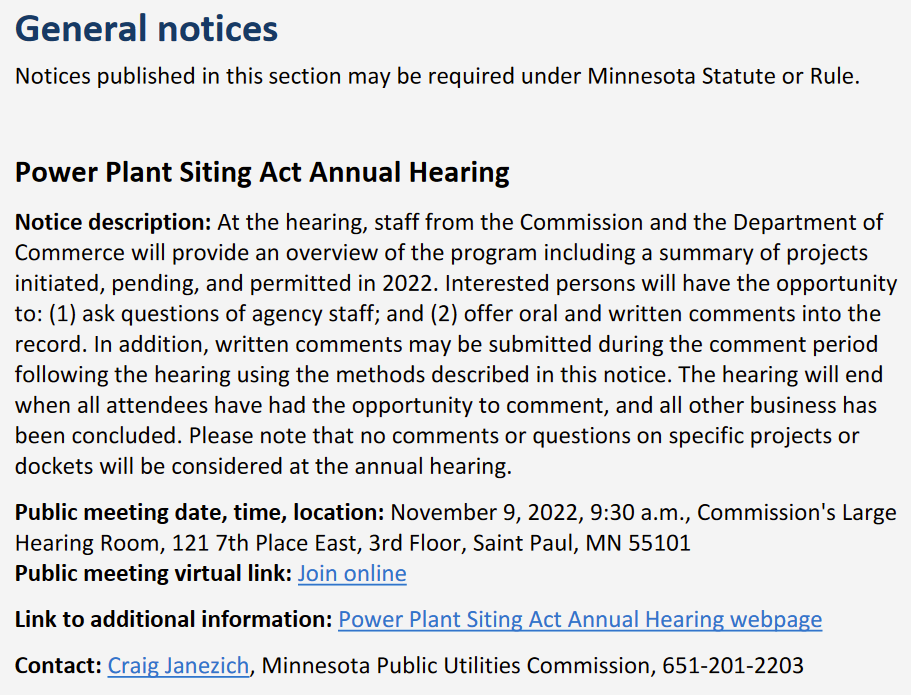
BE THERE OR BE SQUARE!