ICE OUT in Pine Island!
August 22nd, 2018
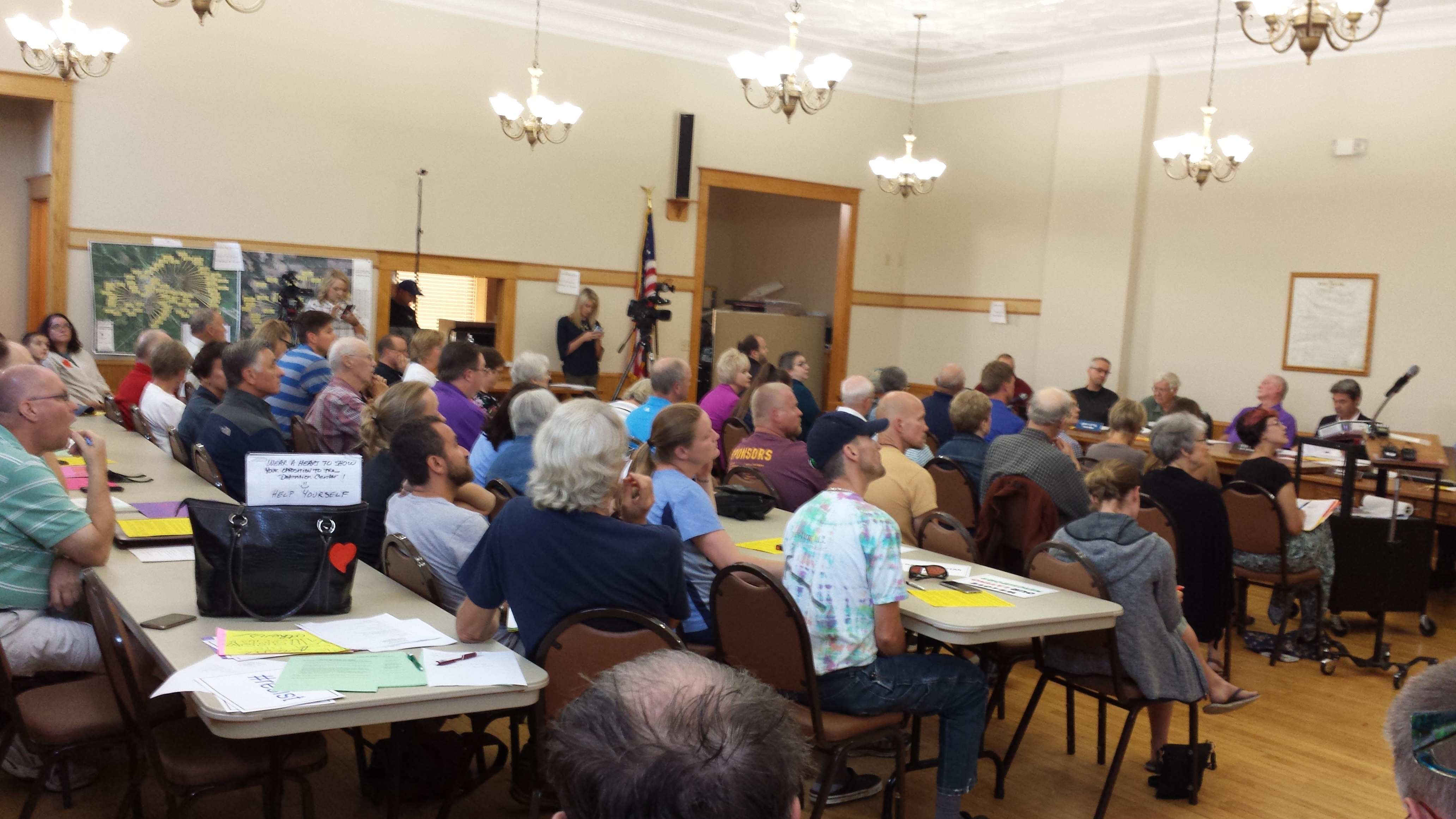
Amazing. Tonight the Pine Island City Council reversed its position and rescinded its previous Resolution in support of the ICE detention center proposed for Elk Run area of Pine Island. YES!
KAAL – The City of Pine Island Rescinds Support for ICE Detention Facility
KIMT – Pine Island changes its mind on an ICE detention center
Here’s the Resolution rescinding the previous Resolution:

Here’s the original Resolution of support, boilerplate language from the proposed developers:

It’s DONE, for now. It could come back, but methinks they understand that we’re ready! Methinks they know what to expect if they try again!
Withdraw, Ellison — Minn. Stat. 204B.13
August 18th, 2018

DFL? “Endorsed” Ellison today? SHAME:
DFL Central Committee endorses Keith Ellison for attorney general
This behavior is not something open to “plausible denial” by the DFL. There was a similar public allegation against Ellison over a decade ago:
Obviously the Wright County Republican, as a source, is due some skepticism, but, yeah, the similarities are disturbing. Today, what’s important to note is that given this other example, there is no way the DFL did not know of the allegations back circa 2005-2006. That should inform this month’s allegations. Two points makes a line. How many points do you need to have an unfit candidate?
The way the DFL is circling the wagons around Keith Ellison, after shooting Al Franken, tossing him under the wagon, and then dragging him cross country from D.C. to Minnesota, it’s shameful.
With its support of Ellison, the DFL now indeed does face the very real possibility of such strong backlash that many may sit out the Attorney General race in disgust, and Wardlow might be the next Attorney General of Minnesota. WHAT?!?! How horrific can it get?
Come on, folks. Minn. Stat. 204B.13 provides the avenue for withdrawal of Keith Ellison as a candidate for Attorney General of the State of Minnesota — if the DFL and Ellison want to make that happen:
204B.13 VACANCY IN NOMINATION; PARTISAN OFFICE.
Subdivision 1.Partisan office.
(a) A vacancy in nomination for a partisan office must be filled in the manner provided by this section. A vacancy in nomination exists for a partisan office when a major political party candidate who has been nominated in accordance with section 204D.03, subdivision 3, or 204D.10, subdivision 1:
(1) dies;
(2) withdraws by filing an affidavit of withdrawal, as provided in paragraph (b), at least one day prior to the general election with the same official who received the affidavit of candidacy; or
(3) is determined to be ineligible to hold the office the candidate is seeking, pursuant to a court order issued under section 204B.44.
(b) An affidavit of withdrawal filed under paragraph (a), clause (2), must state that the candidate has been diagnosed with a catastrophic illness that will permanently and continuously incapacitate the candidate and prevent the candidate from performing the duties of the office sought, if elected. The affidavit must be accompanied by a certificate verifying the candidate’s illness meets the requirements of this paragraph, signed by at least two licensed physicians. The affidavit and certificate may be filed by the candidate or the candidate’s legal guardian.
What happens? DFL “endorses” Ellison. But then, this primary showed the value of DFL endorsements.
Get out and VOTE!
August 14th, 2018


It’s all about coal… as if there was any doubt!
July 24th, 2018

That’s the Coal Creek coal plant in North Dakota. Back in late August 2006, I got on the bus and went on the tour of the coal plant and the Falkirk coal mine. Well worth it! Anyway, google alerts caught this article recently:
North Dakota coal plant to upgrade transmission system that carries power to 500,000 people
UNDERWOOD, N.D. — Greg Schutte compares Great River Energy’s current transmission system to an 8-track tape and the improvements being made as upgrading to the latest iPhone.
The CU HVDC line, which stands for high voltage direct current, was put in service 40 years ago in 1978.
It’s an extremely important line to GRE because it moves 73 percent of the cooperative’s power supply 436 miles from Underwood to Buffalo, Minn., west of the Twin Cities, and serves about 500,000 customers across Minnesota and parts of Wisconsin.
The power cooperative is preparing to invest $130 million in the line, which Schutte said is imperative to continue producing power at the state’s largest coal-fired power plant, Coal Creek Station.
“It’s an investment in the station and an investment in Coal Creek Energy Park,” Schutte said.
“We had inklings the stations were getting too old,” Schutte said, so GRE performed a life assessment on the system. “We found out we had some issues.”
The main concern is with the thousands of valves located within the conversion equipment, all of which are oil lubricated. The newer technology changes that, making the valves fireproof and reducing risk of failure.
So in 2015, GRE awarded a contract to ABB, a Swedish company, to replace the system.
Starting in March [2019], the power plant and transmission system will go through a 74-day outage, running at half power for all but three days of total shut down. In that time, ABB will gut and reconstruct the two 65-foot stacks that convert the power for transport across the line.
“We’re basically just keeping a shell,” Schutte said. “That’s a huge outage for us.”
GRE began the process seven or eight years ago and, in the past couple years, has devoted more than 20,000 internal engineering hours to making the conversion run smoothly.
A 350-by-100-foot building is being constructed on site to serve as a staging area as the equipment is shipped from overseas. The contractors will pre-assemble as much as possible.
“They want to be really focused once the outage starts,” GRE spokesman Lyndon Anderson said of crews that will be running 24/7.
More than 100 union contractors will be on site.
“It’s the biggest project on our books,” Anderson said.
Along with the valves, the computers that control the system, “the brains of it,” are being replaced, according to Schutte.
The components that make up the system will be reduced by 70 percent, which means less moving parts to maintain.
The system also will see a 7-megawatt efficiency gain because it will be water cooled rather than air cooled. Currently, GRE has to power 1,000-horsepower worth of fans that force air through the system. With the updates, they can sell that power rather than using it.
“That’s nothing to shake your head at either,” Schutte said.
Once the project is complete, the staging building will become a shop for the line and substation maintenance crew. ABB will stay on site for a 90-day trial operation after the outage.
Schutte said there are only five transmission lines in the United States like the CU HVDC line and it’s one of the oldest. The only remaining one that will need updating is Minnesota Power’s Square Butte, HVDC line, which also runs through North Dakota between the Minnkota Power Cooperative’s Milton R. Young Station and Duluth, Minn. Schutte predicts that line is about four years behind GRE’s for updates.
GRE’s line has been extremely reliable, running nearly 100 percent of the time, according to Schutte. Without the updates, it was predicted that reliability would drop off next year and the cooperative wanted to be ready for it.
The last major development by GRE was the building of the Spiritwood Station, which had a $437 million price tag. The cooperative’s DryFining technology installed at Coal Creek cost about $285 million.
Other area transmission projects have involved new construction. Basin Electric Power Cooperative recently finished a 345-kilovolt line from Beulah to Grassy Butte and Tioga at a cost of $300 million, according to Basin spokesman Curt Pearson.
Mark Hanson, a spokesman for Montana-Dakota Utilities, said MDU is splitting the cost of a $240 million to $300 million 345-kilovolt line between Ellendale and Big Stone City, S.D., with Otter Tail Power Cooperative.
Note that the little 200MW Stanton coal plant is closing right now:
Life cycle of lignite plant powers down
ABB, as above, got the Coal Creek job — here’s some of their PR:
CU HVDC Project – Stability over long distances and low environmental impact
ABB wins $130 million order to upgrade HVDC power transmission link in the US
There’s been a lot of new transmission built in the Dakotas, and now they’re going to rehab the CU line?
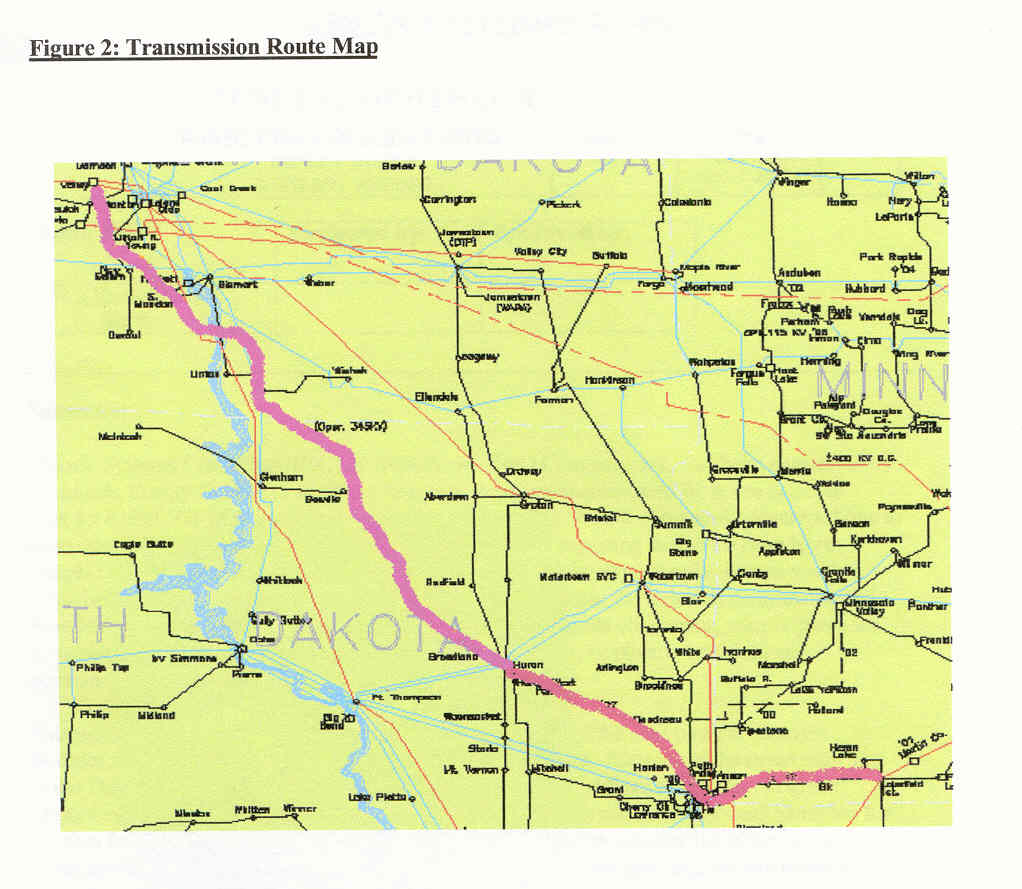
Remember ABB? They’re the ones who did the study way back when to figure out how best to get new coal generation out of the Dakotas:
And GRE’s coal drying operation, here’s an article I found while looking for details on the Coal Creek rehab:
Lignite and sub-bituminous coals from western U.S. contain high amounts of moisture (sub-bituminous: 15 to 30%, lignites: 25 to 40%). German and Australian lignites (brown coals) have even higher moisture content, 50 and 60%, respectively. The high moisture content causes a reduction in plant performance and higher emissions, compared to the bituminous (hard) coals. Despite their high-moisture content, lignite and sub-bituminous coals from the Western U.S. and worldwide are attractive due to their abundance, low cost, low NOx and SOx emissions, and high reactivity. A novel low-temperature coal drying process employing a fluidized bed dryer and waste heat was developed in the U.S. by a team led by Great River Energy (GRE). Demonstration of the technology was conducted with the U.S. Department of Energy and GRE funding at Coal Creek Station Unit 1. Following the successful demonstration, the low-temperature coal drying technology was commercialized by GRE under the trade name DryFining TM fuel enhancement process and implemented at both units at Coal Creek Station. The coal drying system at Coal Creek has been in a continuous commercial operation since December 2009. By implementing DryFining at Coal Creek, GRE avoided $366 million in capital expenditures, which would otherwise be needed to comply with emission regulations. Four years of operating experience are described in this paper.
(PDF) Four Years of Operating Experience with…. Available from: https://www.researchgate.net/publication/282203428_Four_Years_of_Operating_Experience_with_DryFiningTM_Fuel_Enhancement_Process_at_Coal_Creek_Generating_Station [accessed Jul 23 2018].
NO ICE! Pine Island City Council meeting last night
July 18th, 2018
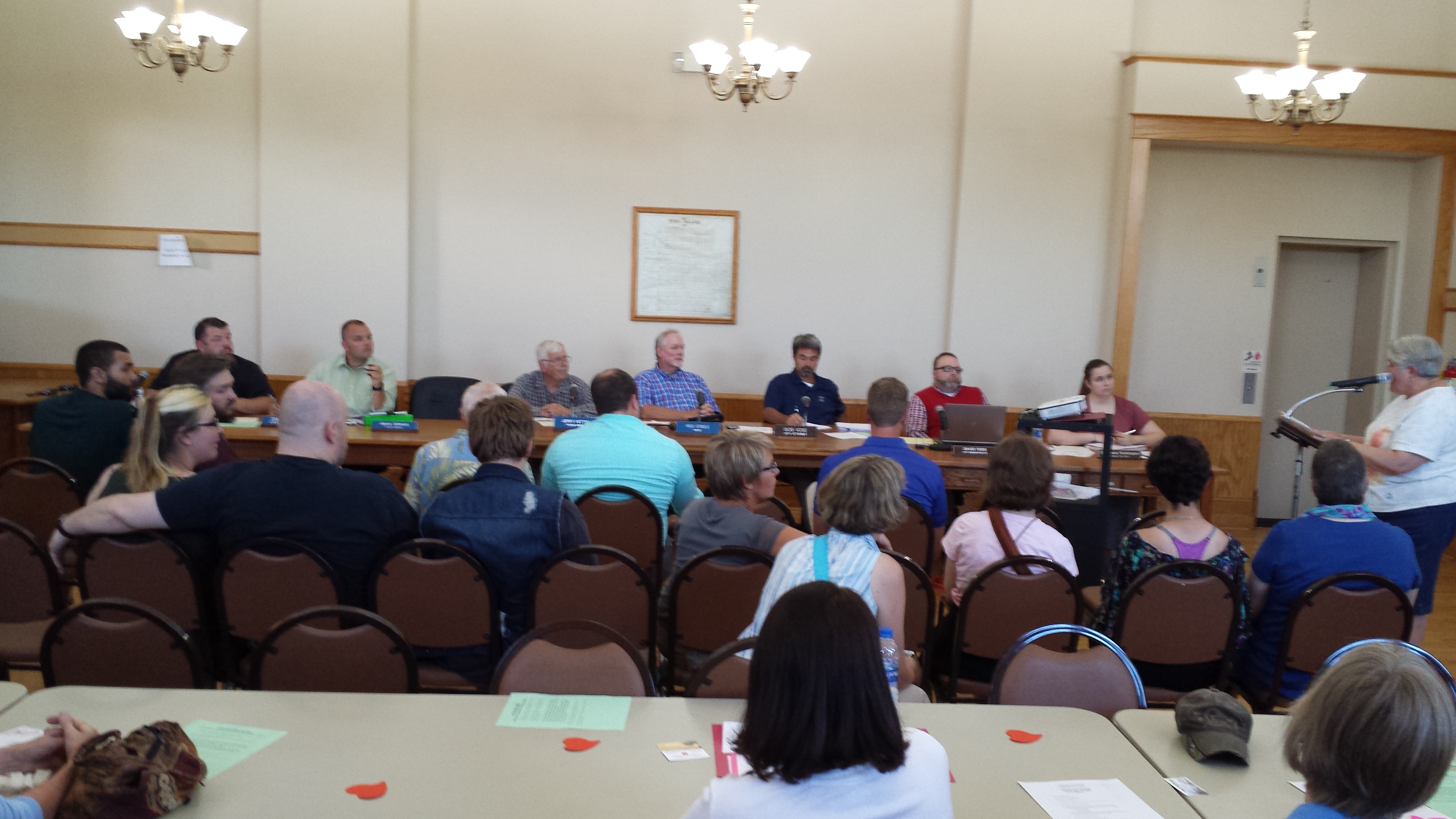
I should have gone up in the front row and captured the smirk on the Mayor’s face through almost all of the meeting. Was he nervous and feeling the heat, or was he dismissive of everyone who showed up? Showed up for what? For the Pine Island City Council meeting, the first one after City Council meeting where they voted to approve a resolution of support for Management and Training Corporation’s 640 bed ICE detention facility.
Here’s Alan Muller’s comment:
FULL meeting link — City says their site is broken so they posted it HERE – CITY FB PAGE
Here’s the Post Bulletin on the meeting:
Crowd weighs in on potential Pine Island ICE facility
The ICE request for proposals:
Immigration Detention Services Multiple Areas of Responsibility